SUSTAINABILITY


Disposal information
Our capsules are certified industrially compostable in accordance with DIN EN 13432, and carry the TÜV certification mark.
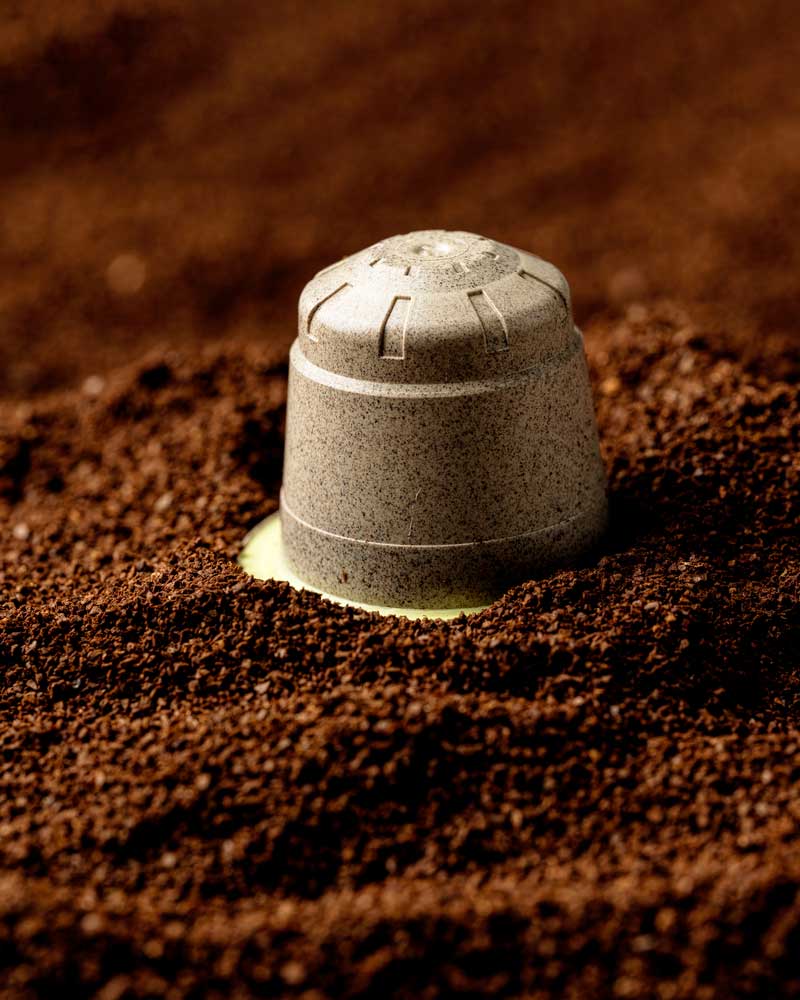
Our capsules are made from approximately 80% coffee chaff — a natural byproduct of the roasting process — combined with around 20% PLA, a plant-based biopolymer derived from renewable sources such as sugarcane. This unique blend not only gives new life to a waste material but also ensures the capsules are designed to break down efficiently under the right composting conditions.
For best results:
Place used capsules in the organic waste bin, unless a separate collection for industrial composting is provided, so they can be sent to a professional composting facility. There, they fully decompose within 12 weeks.
Home composting is not recommended, as conditions are often too inconsistent for effective breakdown.
Please note:
In many countries, compostable plastics like PLA are not yet accepted in the standard organic waste stream. In such cases, the capsules must be collected separately and sent to an industrial composting facility. However, even if they end up in the regular waste bin — whether incinerated, landfilled, or recycled — our capsules still carry a significantly lower environmental impact compared to conventional coffee capsules made of aluminium or petroleum-based plastic.
Always check your local waste guidelines to confirm how compostable capsules should be disposed of in your area. Here some examples (update June 2025)*:
- Sweden: Infrastructure is limited, and compostable PLA capsules are rarely accepted in food waste bins.
- Germany: Advanced system, but only about 58% of industrial composting facilities accept PLA.
- Italy: Well-established industrial composting; PLA capsules are widely accepted in food waste bins.
- France: Infrastructure varies by region; PLA acceptance depends on local municipality rules.
- Denmark: Composting systems focus strictly on food waste; PLA capsules are not accepted.
- Spain: Improving infrastructure with supportive regulations; PLA capsules are increasingly accepted.
*Local differences may apply – no guarantee can be given for accuracy or completeness.